
By Wilson Cady
Revised by Randy Hill (August 2024)

This 5,150-acre refuge was created in 1965 to protect the Dusky Canada Goose, a dark-breasted subspecies that nests mainly on the Copper River delta in south central Alaska. A daily fee or an Federal Access Pass is required and is good at both units of the refuge that are open to the public. Oak woodland, extensive areas of marsh, and wet fields attract a great diversity of other bird species, including Sandhill Cranes. Much of the refuge is closed to provide sanctuary for Bald Eagles and other nesting species. Two units that are open to the public can be reached by taking Exit 14 from I-5 and driving west on SR-501 (Pioneer Street). Turn left at S Ninth Avenue in Ridgefield (2.5 miles) and drive 0.6 mile to the entrance to the River “S” Unit, on the right. The entrance road goes steeply down through a ravine forested with Douglas-fir, Western Redcedar, and Bigleaf Maple where you may find Hutton’s Vireo, Varied Thrush (winter), and other passerines. Across Lake River, the refuge is diked and managed through agricultural practices to provide winter food and resting areas for up to 25,000 geese and 40,000 ducks. Tundra Swans are abundant from fall to mid-March.

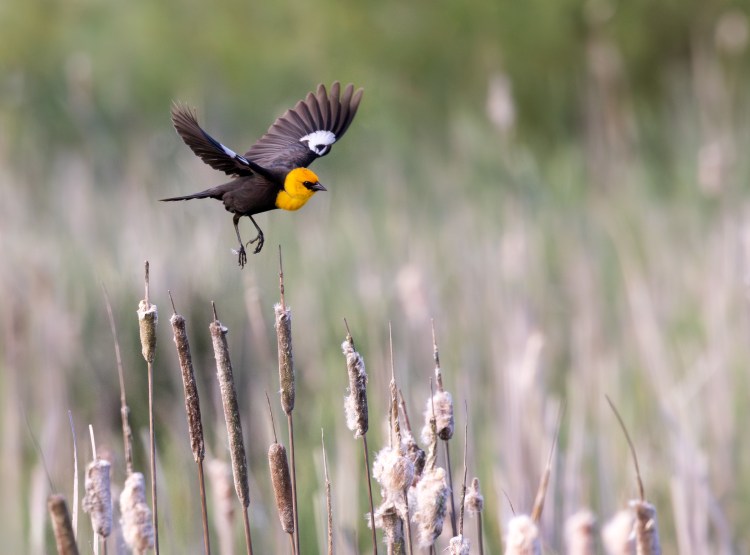
Between October 1 and April 30, you must remain in your vehicle as you travel the 4.0-mile auto tour route. The only exceptions are the entrance parking lot and the observation blind at Rest Lake. Birds become accustomed to vehicles and remain close to the roads without flushing, allowing observation and photography. During the rest of the year you may get out and walk anywhere along the tour route. There are 14 permanent markers along the route, with pamphlet information available. Wheelchair-accessible Kiwa Trail, just past the observation blind, loops through wetlands with nesting rails. Recently, Sandhill Crane nesting has delayed the May 1 opening into July to increase the chance of successful fledging. Yellow-headed Blackbirds nest in cattail patches on several of the lakes along the auto tour, and South Quigley Lake often provides easy viewing during the spring and early summer.
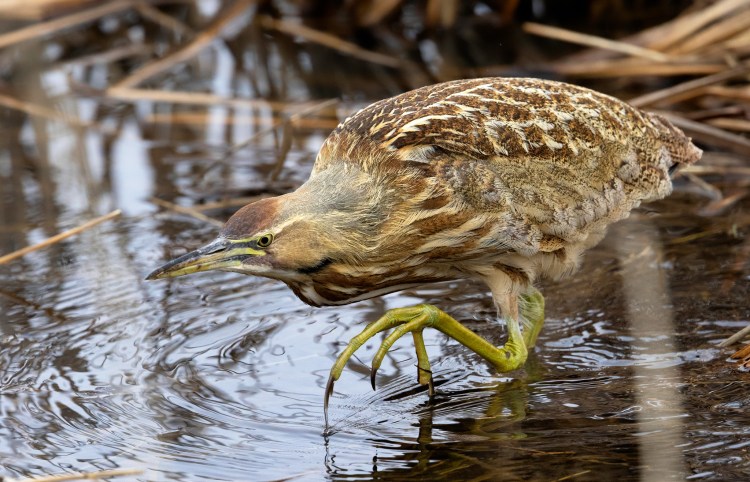
The water level of the many lakes on this unit is controlled to optimize the growth of aquatic plants upon which the waterfowl feed. American Bitterns, Virginia Rails, and Soras are common in these habitats. Since 2011, Black Phoebes have nested and wintered here and may be encountered along the Auto Tour Route. In late summer some of the lakes become mudflats, attracting up to a dozen species of shorebirds. The stands of Oregon Ash, Black Cottonwood, and willows on both this and the Carty Unit are the best place in the state to look for Red-shouldered Hawks, which have wintered here annually for more than two decades.
To visit the Carty Unit return to Ridgefield and turn left onto Pioneer Street, then right in 0.4 miles onto Main Avenue, which leaves town and drops down to cross Gee Creek (brush and trees worth checking for winter sparrow flocks) on its way to the refuge entrance, on the left (1.0 mile). The Ridgefield National Wildlife Refuge (NWR) administrative offices are here in the Carty unit and a nature center is currently under construction adjacent to the admin building with an expected completion date sometime in the Fall of 2025. The nature center will house exhibits and an outdoor observation deck for viewing wildlife. The Carty Unit preserves a Columbia River floodplain in much the same condition as in 1806, when Lewis and Clark visited the Chinook village of Cathlapotle and its 900 inhabitants near this spot. A cedar plankhouse has been built here with help from the Chinooks to provide visitors with information about the people and their connection to the land.

Two trails await you on the other side of the footbridge spanning the railroad tracks. The main trail splits just past the cedar plankhouse. The Carty Lake Trail goes to the left by Duck Lake on your right. A good spot to look for Great Egrets and Great Blue Herons wading in the shallows, Virginia rails in the tall grass at lake’s edge and the occasional Lincoln’s sparrow. This trial crosses Gee Creek and then follows an old road south along Carty Lake’s west side first through cottonwood and willow stands where Western Tanagers, Warbling vireos and Orange-crowned warblers are common throughout the summer months. After the cottonwood and willow stands the trail ultimately opens up to meadow habitat. In winter, Merlins and Peregrine Falcons prey on ducks, snipe, and other birds in the open meadows and the occasional northern Shrike may be seen. During the spring and summer months meadow favorites include Eastern kingbirds, Black phoebes and plenty of American goldfinches. This trial terminates at the south end of Carty Lake at a local ebird hotspot known as the Carty Lake Division Street overlook. Please note access to the Carty Lake trial is seasonal. It is open May 1st through September 30th each year.
At the trail split just past the plankhouse The Oaks to Wetlands Trail (north loop trial), to the right, is a nearly-level, 1.4 mile loop that starts under majestic Garry Oaks. Approximately the first eight of a mile of this trial is paved from the plankhouse after which it is a single track dirt trial. The trail is open year round, but can very slick after recent rain. Western Scrub-Jays and Stellers Jays are common here. The hardwood forests of Clark County are perhaps the only place in the state where one can still reliably see White-breasted Nuthatches of the subspecies aculeata, which once nested fairly commonly from the Vancouver Lowlands north to the Fort Lewis Prairies. This coastal form is still widespread in western Oregon, but the Washington population is close to extirpation. The trail continues over basalt outcroppings forested with Oregon Ash, Garry Oak, and Douglas-fir, with places where you have good views of ponds and wetlands. Many bird species use these mixed habitats. Common summer residents include Willow flycatchers, Swainson thrush, Western wood pewee and Black headed grosbeaks. The northern most point of the Oaks to Wetlands trial provides viewing of Boot lake where canvasback ducks, wood ducks and white pelicans can be seen at certain times of the year.

As part of the Ridgefield NWR there is a $3.00 daily entrance fee for the Carty Unit which people can either pay with cash or a check for upon arrival. Or people can pay for a daily pass or annual Ridgefield NWR pass ($15.00) ahead of time by going to recreation.gov. The Carty Unit has plenty of parking for visitors and ADA compliant bathrooms on site.
 Vancouver Audubon