
By Ken Pitts
The Vancouver Audubon Society, founded in 1975, launched its inaugural conservation endeavor to safeguard the Steigerwald Lake area. Through a decade of dedicated efforts, the site was successfully designated as a National Wildlife Refuge in 1987 and opened to the public in 2009. In 2019 – 2022, a 32-million-dollar restoration project reconnected both Gibbon’s Creek and the Columbia River to Steigerwald Lake’s floodplain by removing several miles of levee along the Columbia and within the floodplain. Partner organizations, including the Lower Columbia Estuary Partnership, planted over half a million trees. Changes occurring over the next decade as these forests mature will yield rich wildlife habitat.
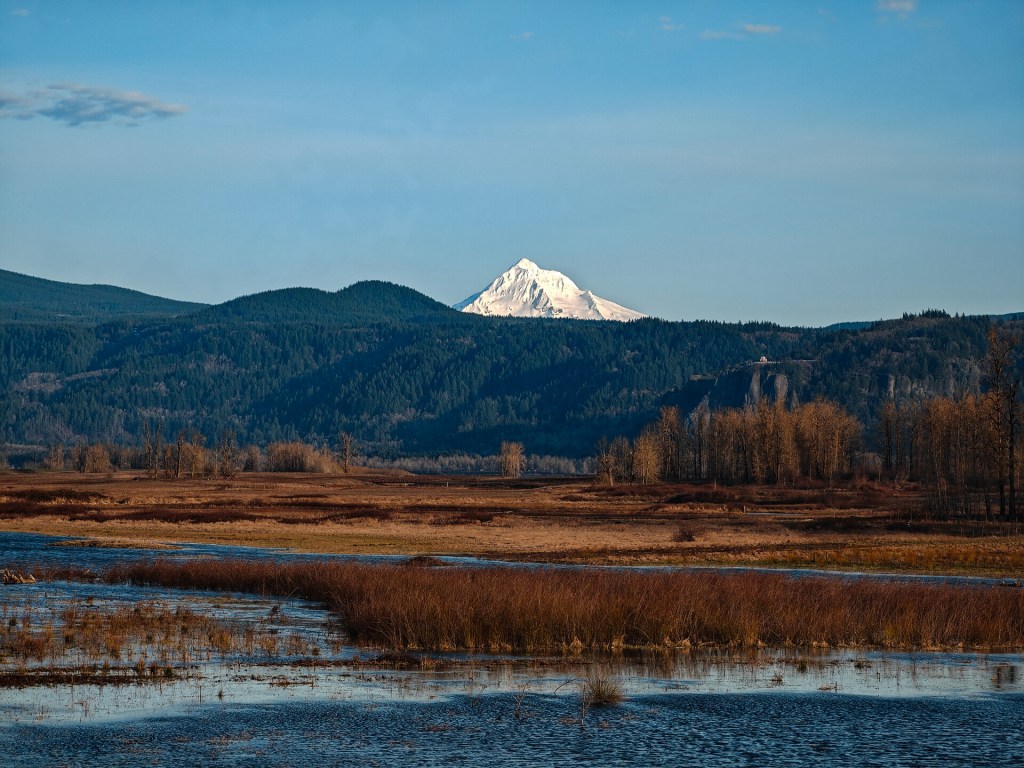
Located on the southeastern boundary of Clark County, this seasonal floodplain lake stands at the southernmost point of Washington. Its strategic position at the confluence of the Columbia Gorge and the foothills of the Cascade Mountain Range creates a significant migratory corridor. Birds traversing the foothills and those seeking a low-elevation passage through the mountains often congregate here.
This 1,200-acre refuge has 216 bird species reported on eBird, including notable sightings of White-faced Ibis, Surf Scoter, White-tailed Kite, Red-shouldered Hawk, Gyrfalcon, American Avocet, Black-necked Stilt, Gray and Ash-throated Flycatchers, Black and Say’s Phoebes, Sage Thrasher, and Sabine’s Gull. A bird list exceeding 70 species is possible here in the right season and day.
Mountain View Trail Birding (see trails map)
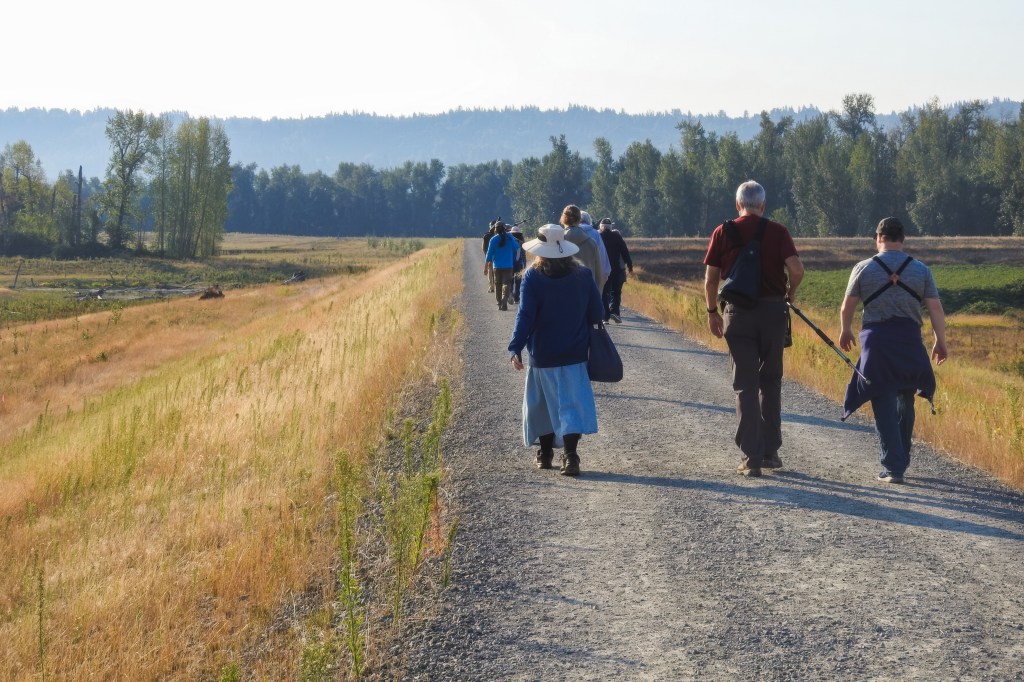
This 12 feet wide 1.1-mile crushed gravel trail is most easily accessed from the Steigerwald Lake NWR parking lot on SR 14 (45°34’17.5″N 122°19’13.5″W). Maximum slope is 5% as it ascends from the two ADA compliant pit toilet restrooms next to the parking lot to an elevated viewing area. On the way, look for American Kestrel, Say’s Phoebe, Northern Shrike, and Mountain Bluebirds hunting from poles of dead plantings. From the top of the levee, birders can use binoculars and spotting scopes to scan Steigerwald Lake to the east and Washougal water treatment settling ponds to the west. American White Pelican, Great Egret, Great Blue Heron, American Bittern, many ducks, geese, mergansers, and Pied-billed Grebe are typical on the surface waters. Bald Eagles, Northern Harriers, Osprey, and Red-tailed Hawks will be patrolling the skies.
Walking from the viewing overlook south on this trail gives birders the opportunity to see shorebirds on mudflats. Black-necked Stilts are showing up more regularly since the restoration. The most typical place to find bitterns has been to look west along the outlet creek from the water treatment ponds. Viewing west typically yields Northern Harriers and occasionally Short-eared Owls. Birders should be prepared to recognize the calls of Marsh Wrens, Virginia Rails, and Soras hiding in the grass and reeds.
Guided bird walks along this trail have yielded as many as 50 species of birds before getting to the Columbia River due to the diverse habitats: lakes and ponds, mudflat edges, berry thickets with surrounding grassland, and riparian forest stands are near the south end. Lazuli Buntings and Yellow-breasted Chats are typical late spring and summer birds on the west side of the trail near the forest and berry thickets.
Gibbons Creek Wildlife Art Trail

Redtail Lake Bridge can be accessed by walking from the river end of the Mountain View Trail east where hikers can turn north into the refuge. Common Yellowthroat and Savannah, Lincoln’s, Song, White-crowned, and Golden-crowned Sparrows are often seen here. Redtail Lake water levels are seasonal, so winter is the best time for seeing waterfowl from the bridge. During the summer and early fall, the mudflats of the drying lake yield dowitchers, both yellowlegs, a variety of sandpipers, and Wilson’s Snipe.
Walking past Redtail Bridge into the riparian forest will allow birders to experience a full set of woodpeckers, including Downy, Hairy, and Pileated year-round. Northern Flickers and Red-breasted Sapsuckers will be present along with White-breasted Nuthatch, Black-capped Chickadee, and Brown Creeper. Late fall through spring, birders can experience both Ruby-crowned and Golden-crowned Kinglets. The willows growing next to the second bridge are go to spots for Nashville, Yellow, Orange-crowned, and Black-throated Gray Warblers and Warbling Vireo in late April and early May.
The last half mile is a seasonal trail open from May 1st through September 30th. It offers riparian forest to its south and views of Steigerwald Lake and Scaup Pond to its north. Lazuli Bunting, Yellow-breasted Chat, Black-headed Grosbeak, Bullock’s Oriole, Willow and Western Flycatchers, and Western Wood-Peewee are typical summer species, but spring migration will add Hammond’s, Gray, and Dusky Flycatchers as possibilities.
River View Trail
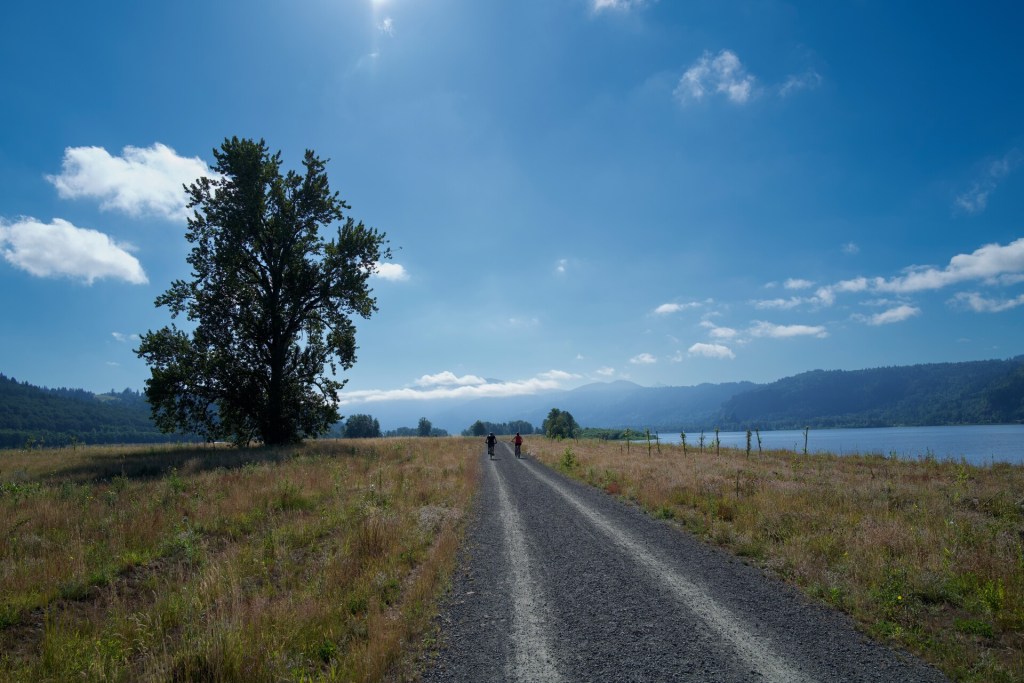
The River View Trail extends along the Columbia River for about 3 miles. There are two bridges and the furthest is where Gibbon’s Creek now flows into The Columbia River year-round, while the water under the first bridge is more seasonal. All the birds possible on the inner riparian forest trails are possible here too, as about 1.5 miles of this trail has The Columbia to the south with its accompanying edge forest. The last 1.5 miles of the trail are currently without any shade but offer great river views. Common and Pacific Loon, Western, Clark’s, Eared, Horned, and Red-necked Grebes have been seen on the river. Bufflehead and Common Goldeneye are typical, but occasionally Barrow’s Goldeneye will be present.
The last bridge with Gibbon’s Creek flowing below is a terrific spot to stand and see the Spotted Sandpiper working the bank, while Bald Eagle, Great Egret, Great Blue Heron, Belted Kingfisher, and Common Merganser fish as the creek empties into The Columbia. Almost every possible swallow species has been reported from this area.
Things to Consider
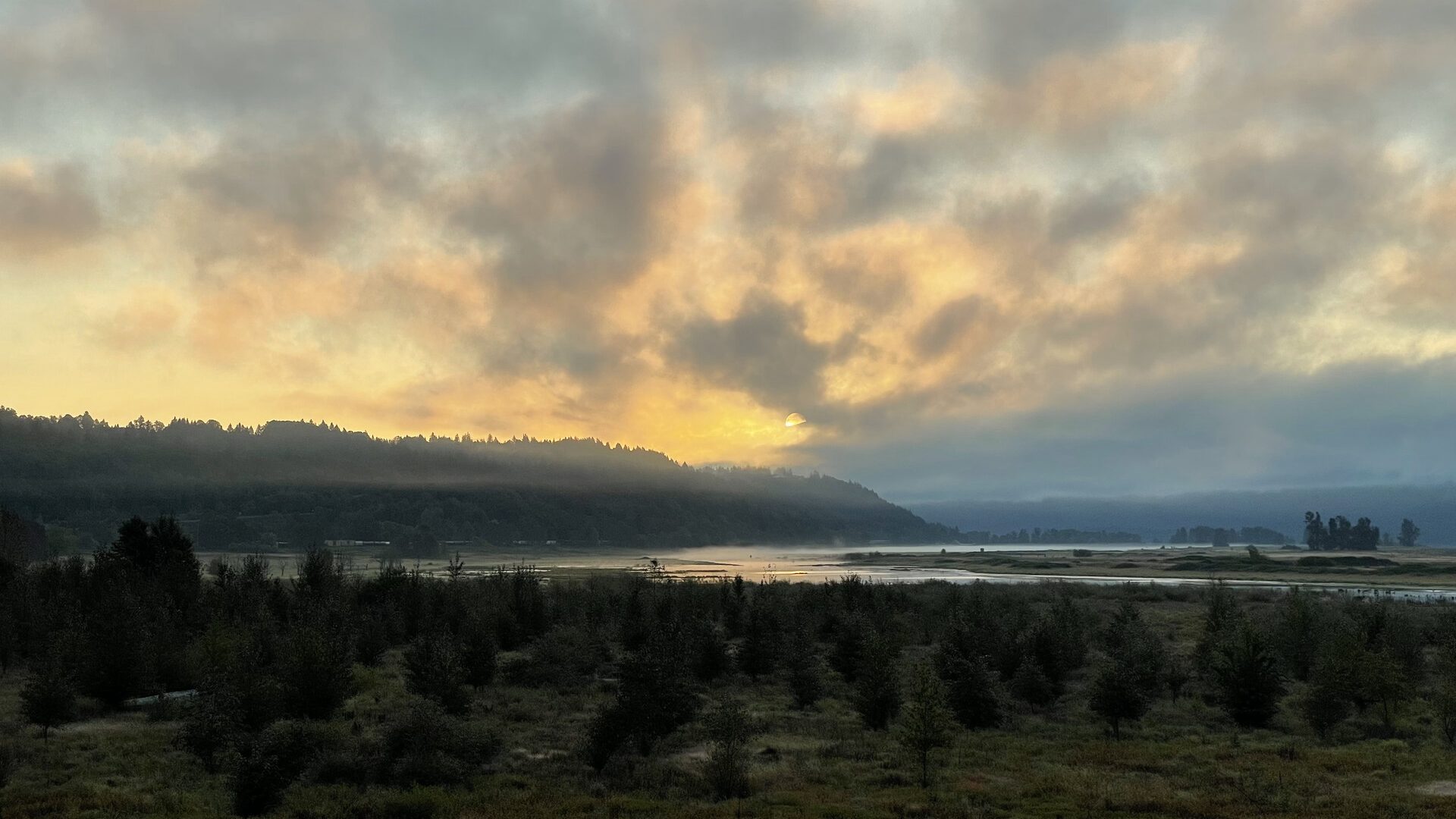
Walking all the trails out and back will be over 6 miles, mostly exposed to the sun. A protective hat and sunscreen, layers of clothing for varying weather, along with adequate calories and water are must haves. Located at the mouth of The Gorge, Steigerwald is known for its stiff breezes/winds and rapidly changing weather conditions. The winter’s cold east wind can be brutal, especially on the Mountain View Trail on the tall and exposed levee. Walking in on a cool summer morning can be quite pleasant, but the exposed walk back to the parking lot in sunny and hot conditions later in the day are a different story.
Some birders find that parking along the east edge of Cottonwood Beach (45°34’17.5″N 122°19’13.6″W) and riding their bikes in on the River View Trail (where bicycles are allowed) is easier than walking in from the Steigerwald parking lot. There are bike racks (shaped like birds) at both ends of the Gibbon’s Creek Wildlife Art Trail. This is especially good if you would like to get to the inner trails and forest quickly without walking the Mountain View Trail. Cottonwood Beach parking does not have a gate that closes at sunset, like the Steigerwald parking lot. Photographers targeting the Short-eared Owls often seen in the furthest last mile can get shots near sunset and make it back to their cars without worrying about the gate.
There are no bathrooms and very few places to sit and rest out in the refuge.
 Vancouver Audubon