
By Ken Pitts
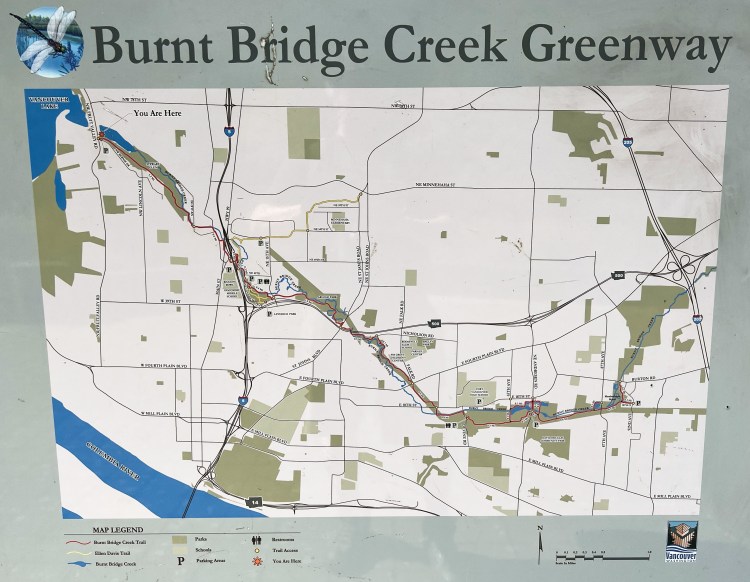
Burnt Bridge Creek Greenway is a trail system about 8 miles long that cuts through the southwest area of Vancouver, WA. It offers extensive paved paths for cyclists, hikers, and runners, but it also offers a smorgasbord of wildlife habitat rich in bird species. Of the many miles Burnt Bridge Creek carves before emptying into Vancouver Lake, there are two prime spots to visit to do birding and wildlife photography: Stewart Glen trail on the west end and Burnt Bridge Creek east trail with Devine Road access and parking. If you are specifically interested in the Devine Road access, please read the warning given near the end of this page about encampments and instructions on how to avoid issues.
Burnt Bridge Creek – Stewart Glen Trail (see trail parking map)
Accessing this trail is most easily accomplished by turning on Bernie Drive from NW Fruit Valley Road and traveling southeast on Bernie until coming to a comfortable place to make a U-turn. Parking on the widened north side of Bernie closest to the entrance is easy and the street is not heavily traveled. There will be a large ADA-compliant porta-potty at the trailhead.
Our Vancouver Audubon guided walks have been on the first 1.5 miles of this trail as a 3.0 mile out and back. It starts with an amazing overlook viewing area of the backwaters of the greenway that form multiple ponds in a grassy meadow. This overlook is a wonderful place to have a spotting scope for observing ducks, geese, pelicans, herons, egrets, and shorebirds utilizing the water and its muddy shorelines. Osprey may be making the plunge and Bald Eagles nest in the conifers on the north side. Listen for the grunt or “kiddick” calls of abundant Virginia Rails in the marsh, but do not expect to see them.
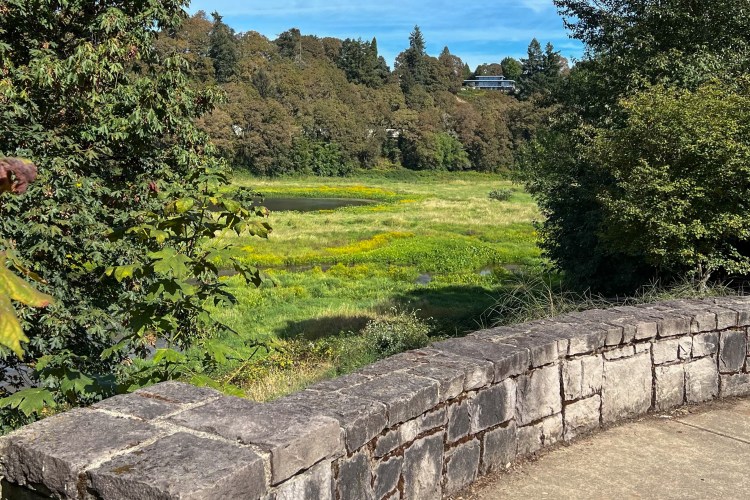

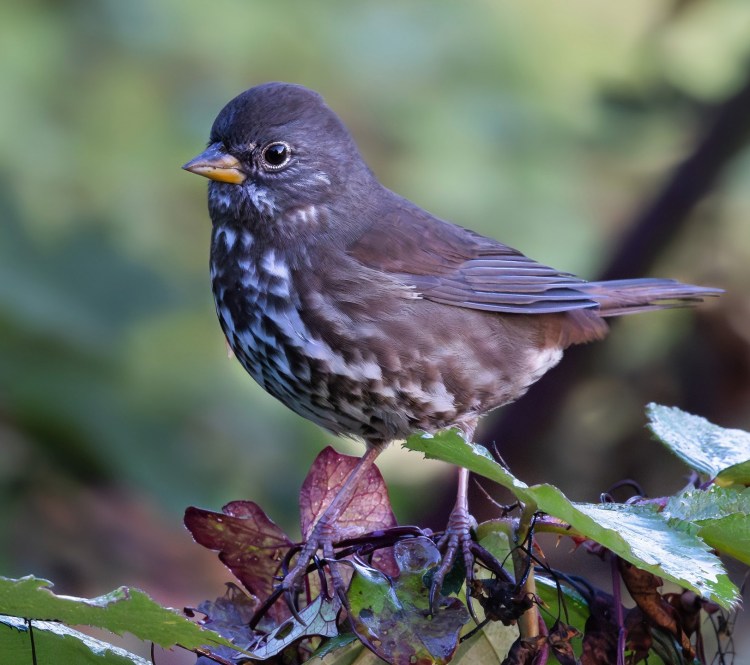
After spending some quality observation time at the overlook, you will want to move upstream (southeast) on the paved and wooded trail. It extends 1.3 miles through thick woods up the right side of the trail, and alternating edge wooded areas adjacent to the marsh and grasslands to your left. That interface can be rich in all the species you would expect in our northwest forests. Woodpeckers, creepers, warblers, sparrows, both kinglets, both species of nuthatches, vireos, three species of thrushes and Western Tanagers abound. Both Black-capped and Chestnut-backed Chickadees patrol this area as there is a mosaic of conifers and deciduous trees.
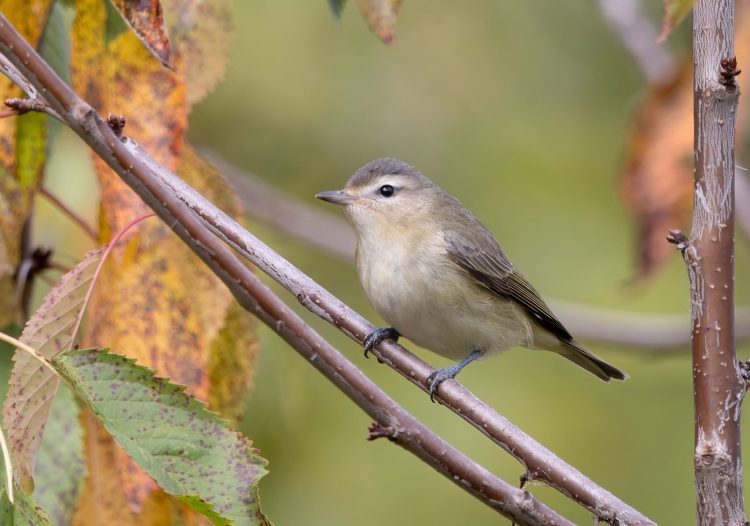
At the 1.0-mile point, the woods fade, and the trail opens into a grassy meadow that has had abundant restoration work. There are unpaved trails that traverse back to the west, or downstream, where you can expect to see both goldfinches, Black-headed Grosbeaks, Cedar Waxwings, sparrows and Warbling Vireos. Continuing and staying to your left, you will find several trails that will loop you back to the main paved trail for a pleasant walk back to the beginning.
If you have children with you, keep your eyes peeled for the large Gnome village in a dark wooded area of the conifers adjacent to the paved pathway. A Great Horned Owl was making its “hoot” call from the dense trees to its south during a recent visit.
This walk is at the top of my list for favorite birding and wildlife photography jaunts in the Vancouver area. On sunny days, the forest is cool and gives abundant shade, but then offers protection from cool breezes during more frigid months. The combinations of pond and mud views, deep and edge forest, along with the grassy meadow paths with shrubby fruiting tree edges make this prime territory for birding success!
Burnt Bridge Creek – Devine Road Trailhead (see trail parking map)
Burnt Bridge Creek eastern section can be an exciting place to take your ears, binoculars and/or camera in search of birds. This is the only place that I have identified the calls of three species of vireos (Hutton’s, Warbling, and Cassin’s) while standing in one location on the same day.
I propose that you park in the lot near the restroom and begin walking east for a two mile out and back hike. I have found it helpful to go off the path and keep the wooded edges to my left, and then walk left into an unpaved gap area about one quarter mile in. The taller deciduous forest to your left will have the forest birds you would expect, but the edges of the smaller restored brush will have outstanding numbers of hummingbirds (Anna’s and Rufous during the summer with Anna’s only during the winter) and all three species of common finches (House, American and Lesser Goldfinches). Warbling Vireos have been consistently seen during the summer and early fall months. Keep an eye toward the sky for raptors and the conifers uphill for Steller’s Jays, Western Tanagers, and Evening Grosbeaks.
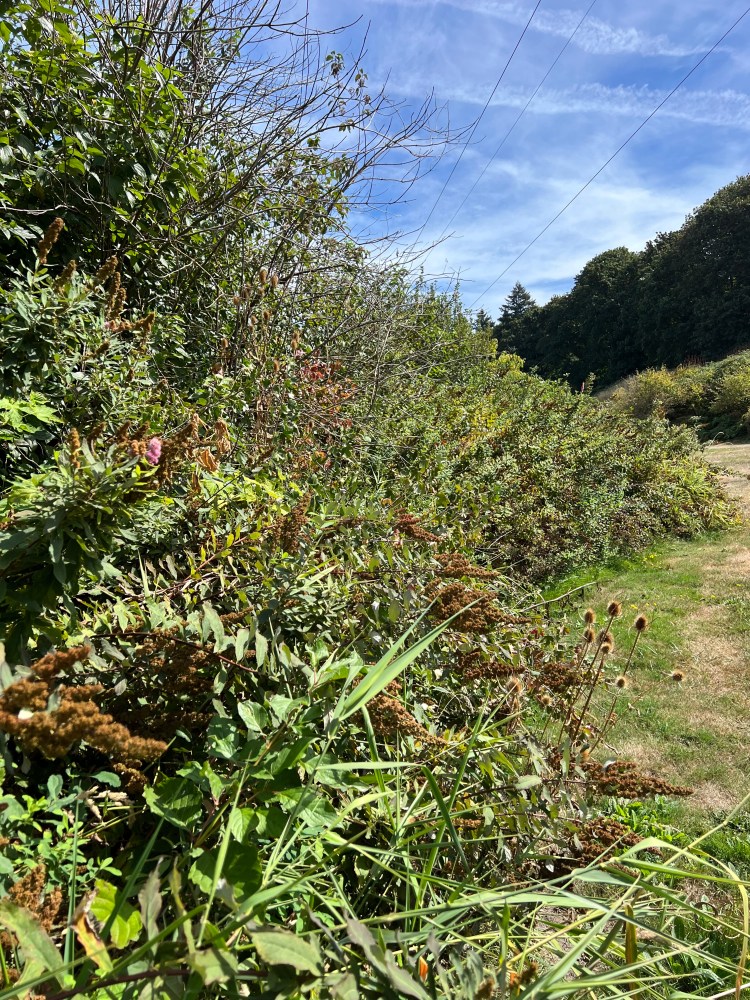
As the paved path continues to the east, the edge of the thick restoration plantings gets closer to it. Several species of willow, Red-osier Dogwood, Cottonwoods, wild roses, spirea, Nine-bark, and Thimbleberry offer birds tremendous cover and food gathering opportunities. Finding a “favorite food tree” and parking for a spell will offer photographers the opportunity for “the shot” they wake up dreaming of – a Rufous Hummingbird visiting bright orange Jewel Weed blossoms.

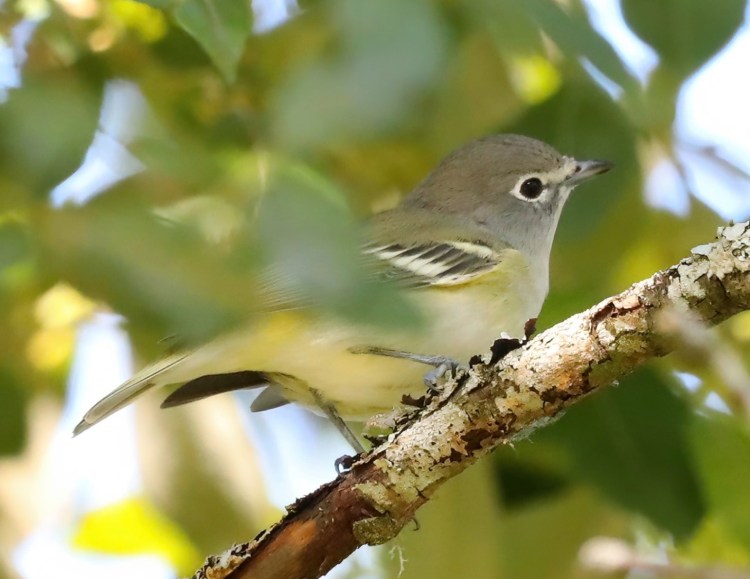
When the paved path forks about half a mile in, take a left. This will lead you to the forest stand where I heard all three species of vireos. You will also get to cross Burnt Bridge Creek and have an opportunity to see Wood Ducks, Mallards, and herons and/or egrets fishing. The habitat is perfect for Green Herons! Moving on around the corner at the first right will take you by cherry trees that delight waxwings and grosbeaks in the late summer and fall.
My suggested walk terminates when you arrive at a pond that has trees hanging low over it. Over the last two years, Barred Owls have been observed sitting in the branches adjacent to and over the pond at about eye level.
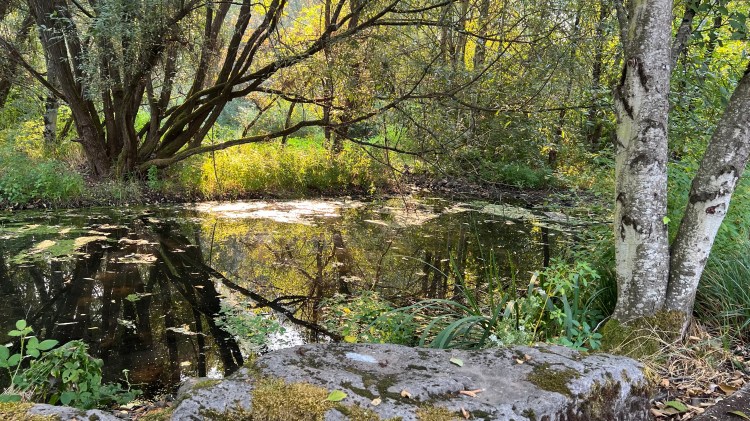
If you continue beyond the pond to Andresen Road and either cross or loop back to your vehicle, be extra aware of your surroundings. Over the past few years, the greenway on both sides of Andresen has been an encampment site for houseless folks. The city of Vancouver recently (fall of 2024) cleared this and continues to make progress. The walk back to the parking area west of Andresen is through an oak forest rich in species, including White-breasted Nuthatches, woodpeckers, and Scrub jays. With luck, an Acorn Woodpecker is possible! I did see one fly over the Stewart Glen at the end of this watershed a on September 29, 2024.
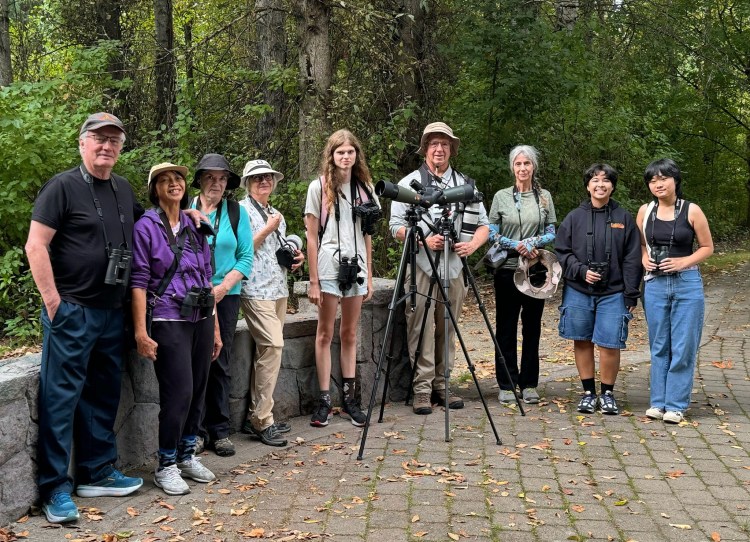
Burnt Bridge Creek Greenway Trail East has burned some great birding memories into my mind and my Canon’s CF Express card.
Happy birding!
Ken
kenp@vancouveraudubon.org
 Vancouver Audubon