
By Beth Marlin Lichter
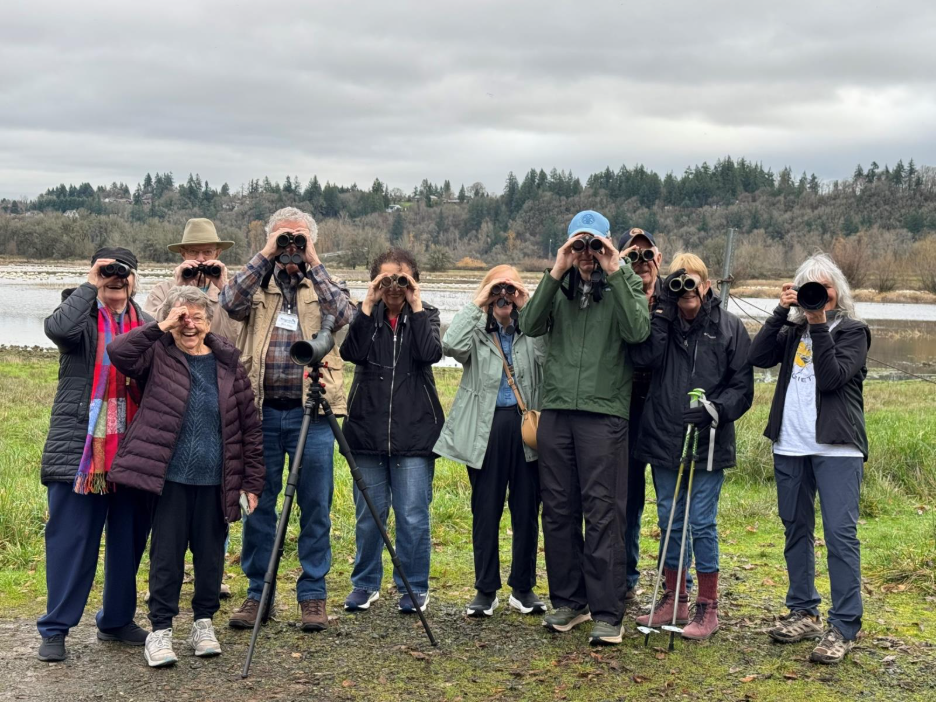
On 12/11/25 Ken Pitts and I took senior residents from University Village in Vancouver, to the Ridgefield National Wildlife Refuge, River “S” Unit. This is the famous auto route, a 4-mile loop through diverse habitats, always a beautiful ride. Your vehicle is your blind this time of year, however between May 1st and September 30th one is permitted to exit the car along the route and walk the Kiwa Trail as well (unless a pair of Sandhill Cranes is nesting adjacent to the trail, in which case it closes). Ken and I enjoy partnering in guided bird walks for VAS. He is the leader. I am like a mama bird who makes sure every participant is enjoying the experience.
Here in the Pacific Northwest, fall weather so far has been downright balmy, punctuated by waves of storms known as atmospheric rivers. Western Washington State has been especially hard-hit with historic river flooding.
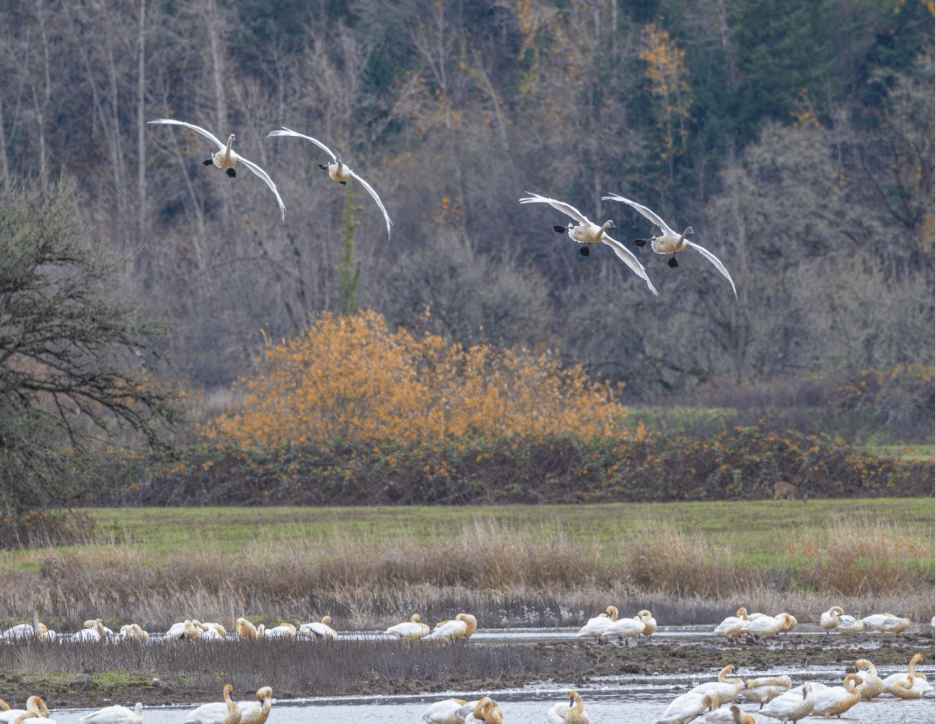
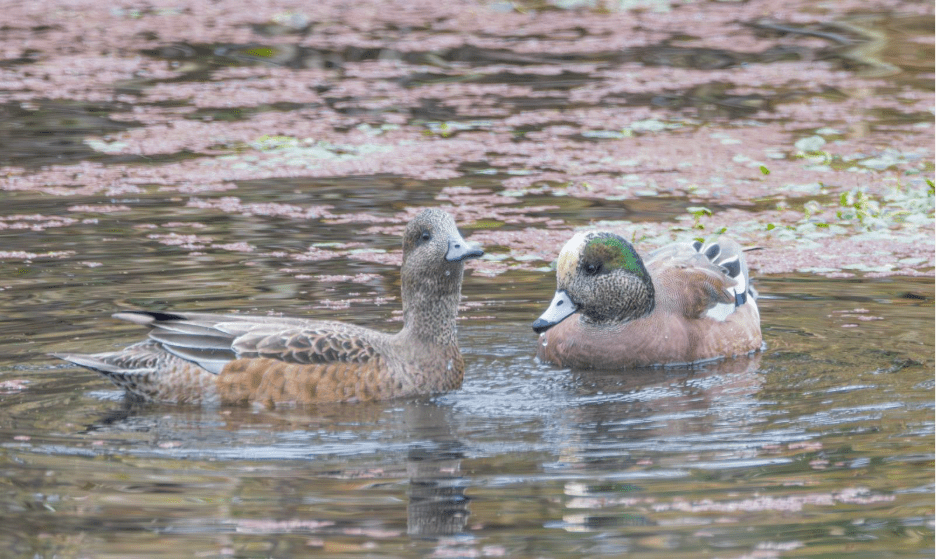
On the refuge, migratory birds arrive daily. A steady succession of rain showers has been crafting the perfect wetlands environment for wintering waterfowl. Trumpeter and Tundra Swans, Canada and Cackling Geese plus many duck species, are populating lakes and sloughs. If you want to observe large birds taking off and landing on water, this is the place.
Joe Ybarra, delightful employee of University Village, drove the facility bus for this outing and due to the vehicle’s height, we enjoyed an elevated and advantageous view across the refuge. VAS provided binoculars for the group and there was a lot to see. Ken’s eBird checklist includes 37 species of birds. Ridgefield NWR eBird Checklist 12/11/25.
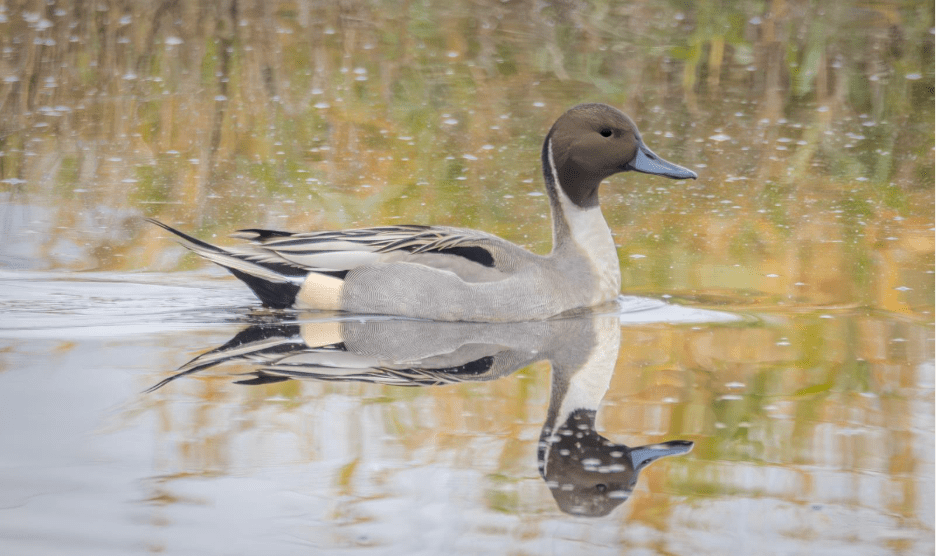
Hooded Mergansers, Buffleheads, and elegant Northern Pintails were among the highlights of our visit, along with the raptors who were paying close attention to the influx of waterfowl. We spotted Bald Eagles, Red-tailed Hawks and Northern Harriers all looking for an opportunity to swoop down and grab something.
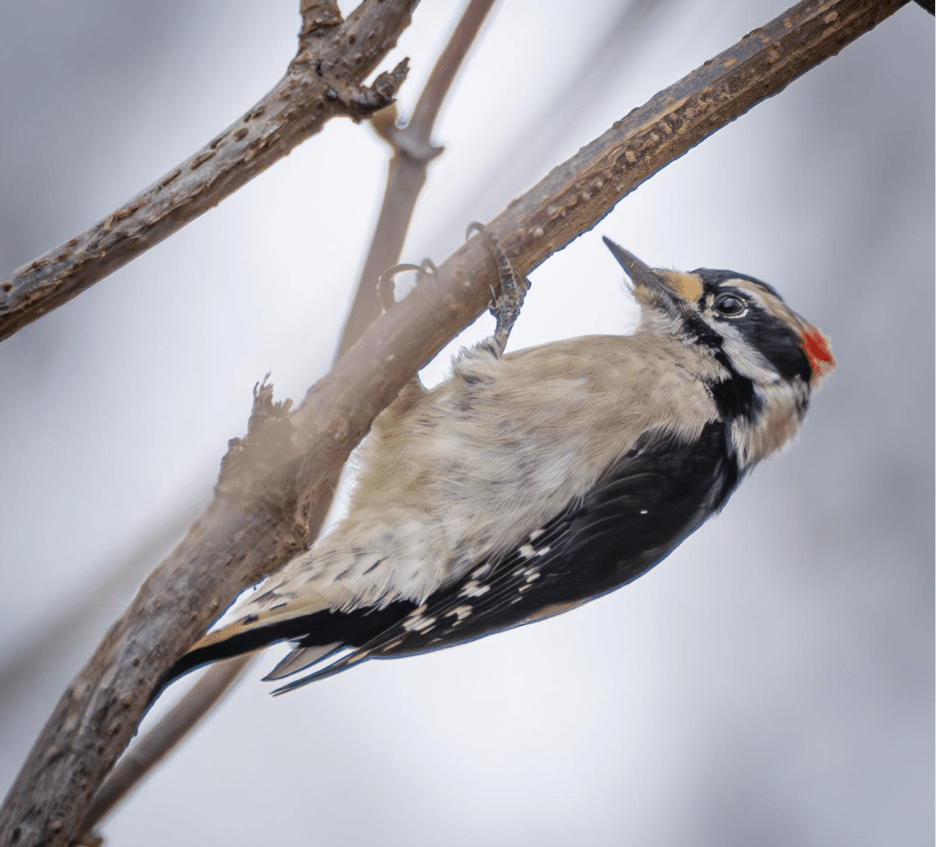
In addition to our sightings, the soundscape was remarkable as well. Flocks of geese, swans and ducks loudly announced their comings and goings and Sandhill Cranes chimed in with their archaic-sounding calls. All in all it was quite a wonderful experience. The most surprising bird encounter was that of a Downy Woodpecker, working a tree right beside the mid-loop restrooms, oblivious of our endeavors to observe its movements up and down and all around. We had exited the van to walk a short year-round trail to the wooden bird blind and there it was pecking away just above eye level.
Ken and I will return to University Village in the spring (date to be determined) with our audio-visual presentation. This will be an overview of our favorite bird moments of the year, including photographs and anecdotes. Then a day or two after, we will take residents to the refuge, this time with the seasonal ability to exit the bus and do things like stand alongside reedy wetland habitat near the entrance of the auto route and listen for the unique calls of the Yellow-headed Blackbirds.
Representing VAS in this capacity, bringing folks from a senior living community out to observe wildlife in a safe and comfortable environment, is quite rewarding. We hope to continue this relationship with University Village and look forward to many more bus loops with residents around the River “S” unit.
 Vancouver Audubon