
Photo Essay by Beth Marlin Lichter
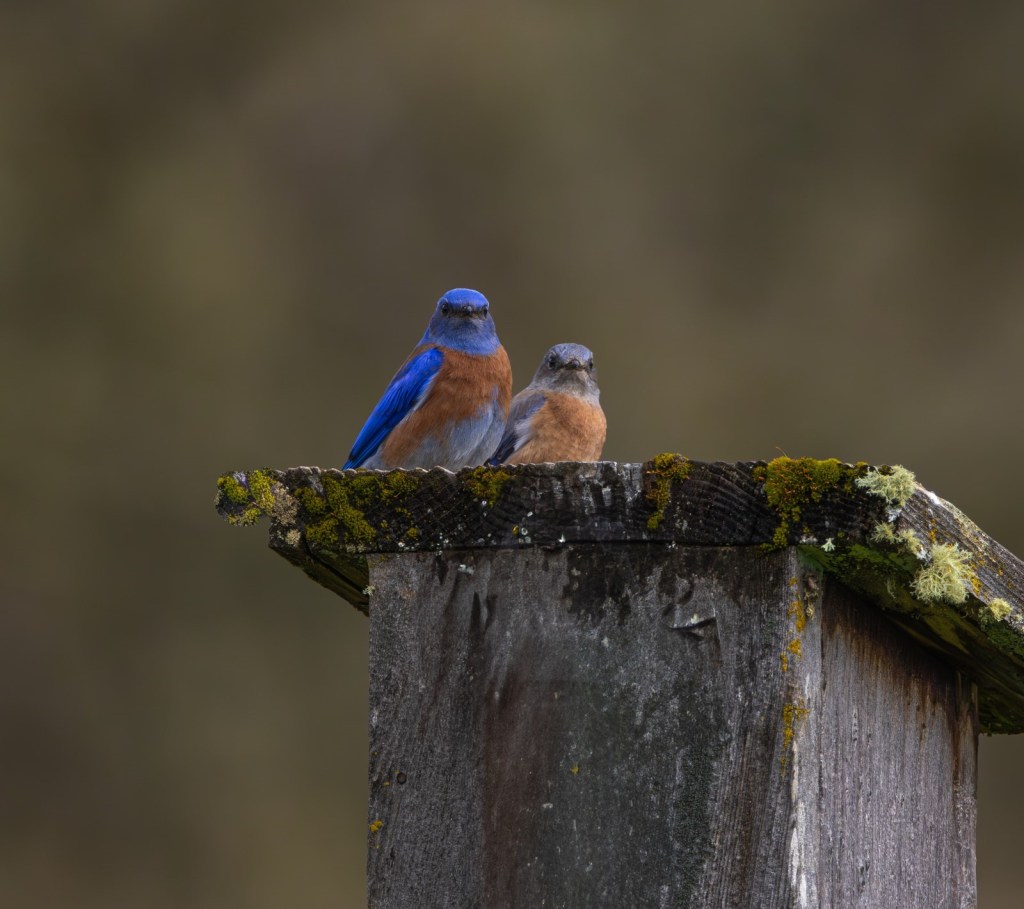
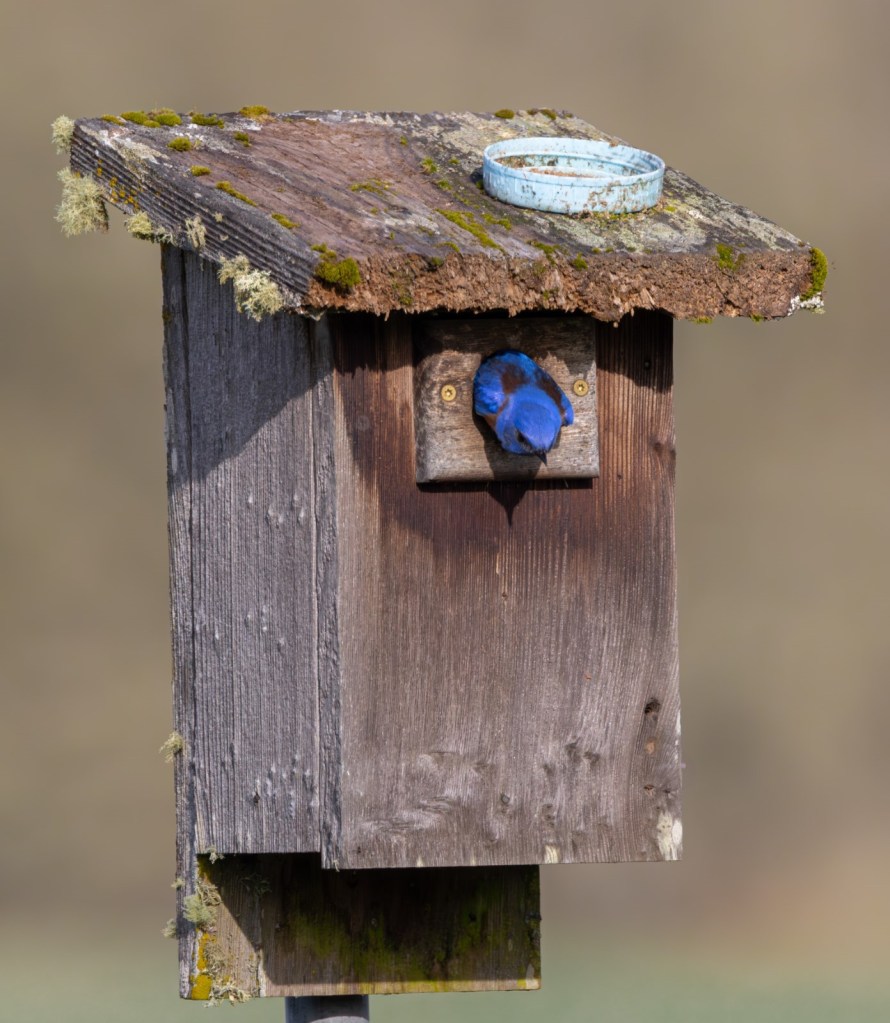
According to Cornell Lab of Ornithology, Champoeg State Heritage Area near Newberg, Oregon is home to the northernmost spot in the continental United States, where resident pairs of Western Bluebirds have been spotted. I can happily say that yes, there is a male and female using one of the nesting boxes this year right alongside the walking trail down the hill from the main Champoeg parking lot. They don’t seem bothered by runners, bicycles, strollers, and dogs on leashes just a few feet away.
The morning of Tuesday, March 25, 2025, I parked myself alongside this path to spend a few hours observing the rituals of foraging and keeping house, hoping to get photos of these magnificent birds in flight.
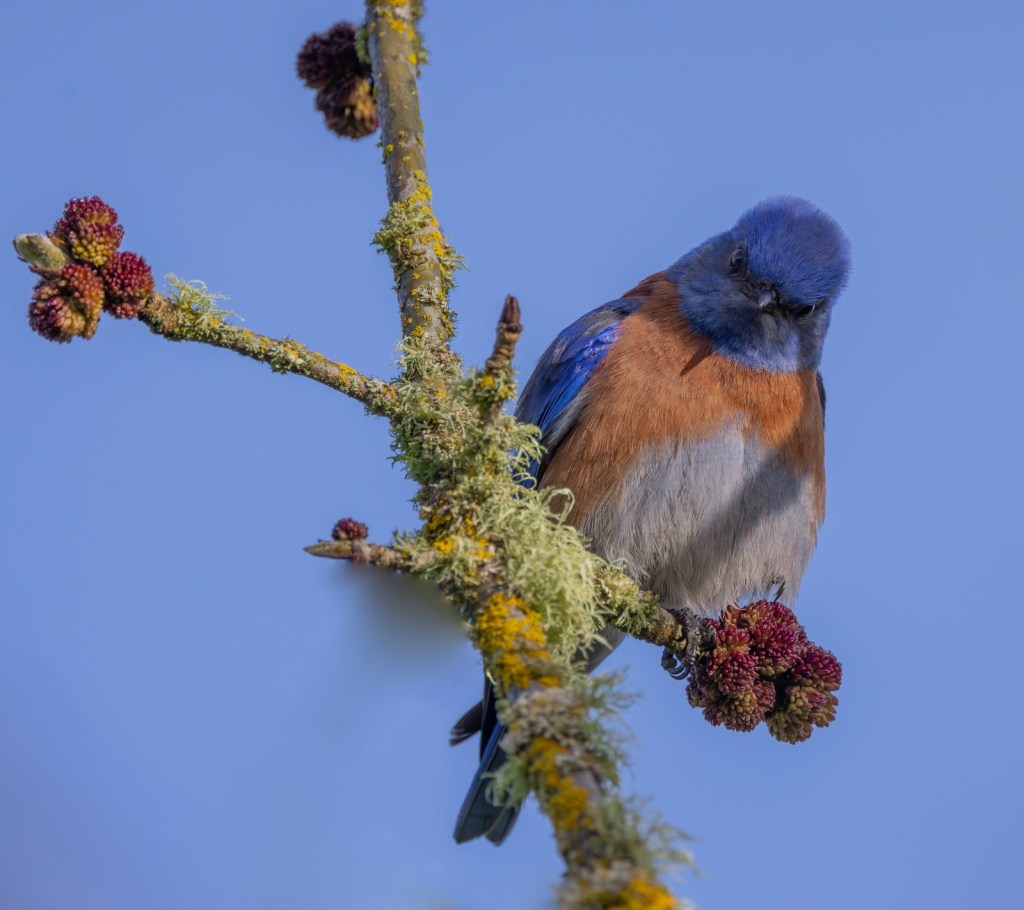
Directly above my head, perched in his favorite tree with a clear view of the nesting box, this male Western Bluebird looked down at me. He had a lame left foot which did not appear to affect his mobility and swiftness at all. From grass to post to nesting box to tree, he and his female mate gave me plenty of opportunities to photograph them going about their business.
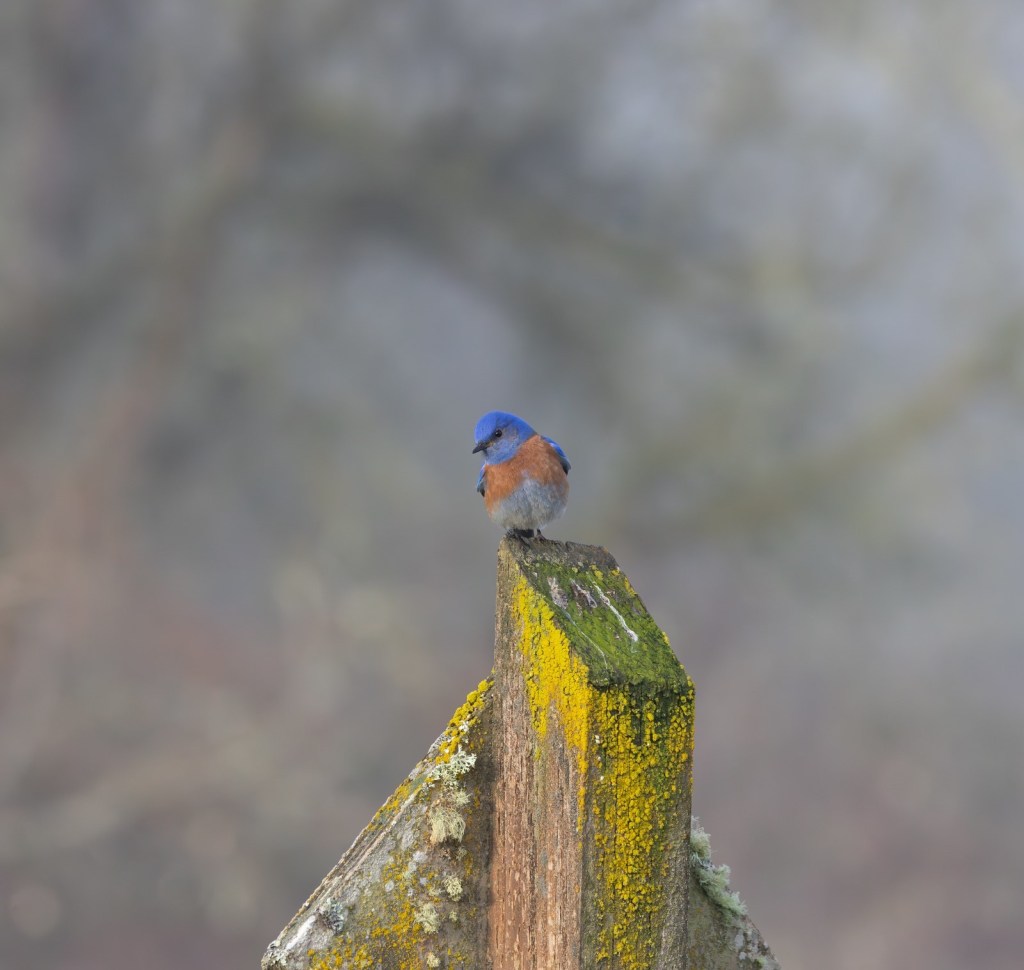
It didn‘t take long for this male to determine that my presence was not a threat. Occasionally he checked in on me. When the female left the nesting box to snag worms, he resorted to vigorous swoops and dives and offensive maneuvers, defending against the Tree Swallows, who were continually looking for a good moment to raid the domicile and claim it for themselves.
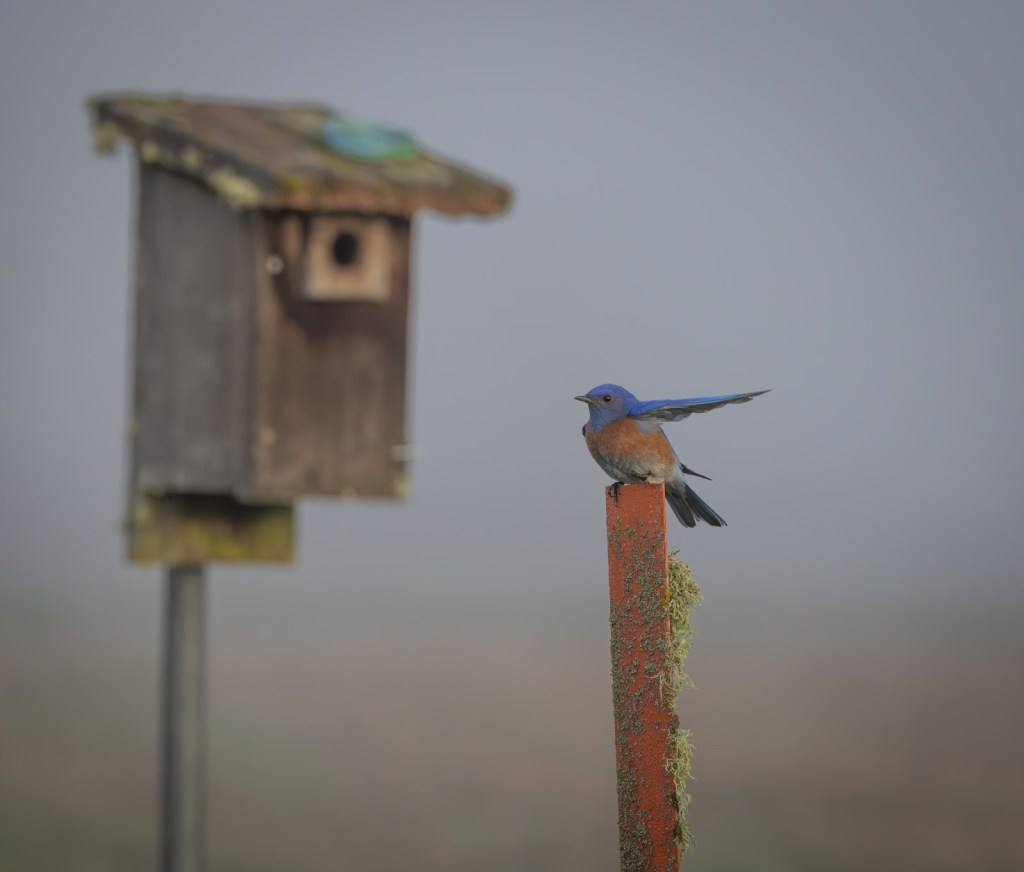

The females, although more muted in color, are beautiful as well. These birds weigh about an ounce. They are cavity nesters and depend on already drilled woodpeckers’ holes or nesting boxes for incubating eggs, since their beaks are not equipped for digging out bark.
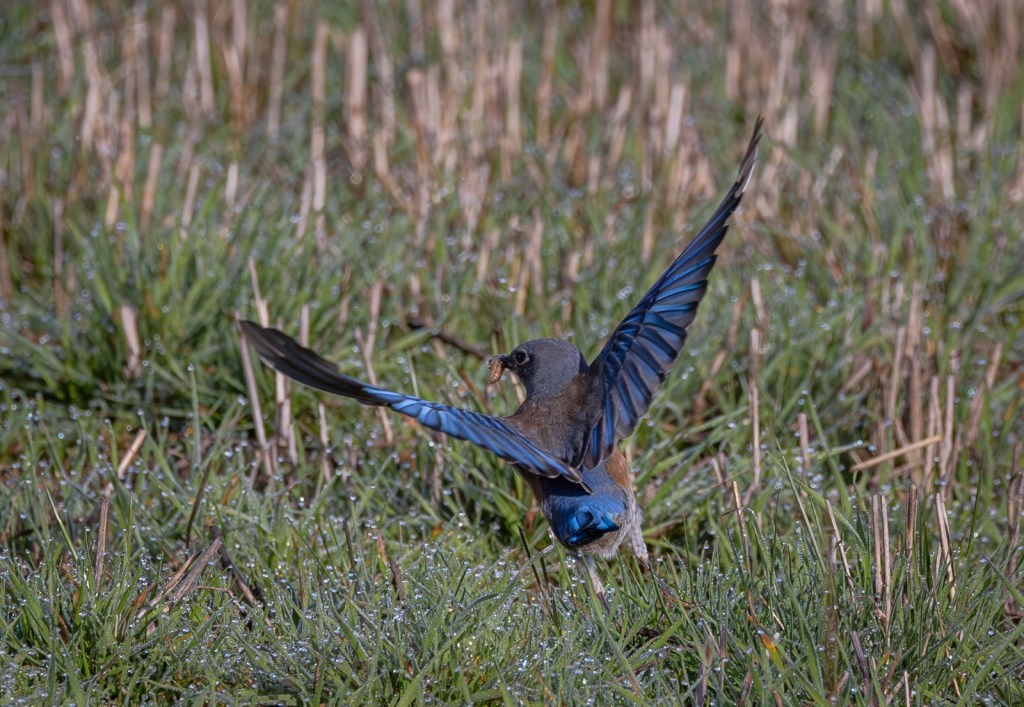
Both birds caught worms and insects, diving into the grass and coming back up right away, super vigilant.
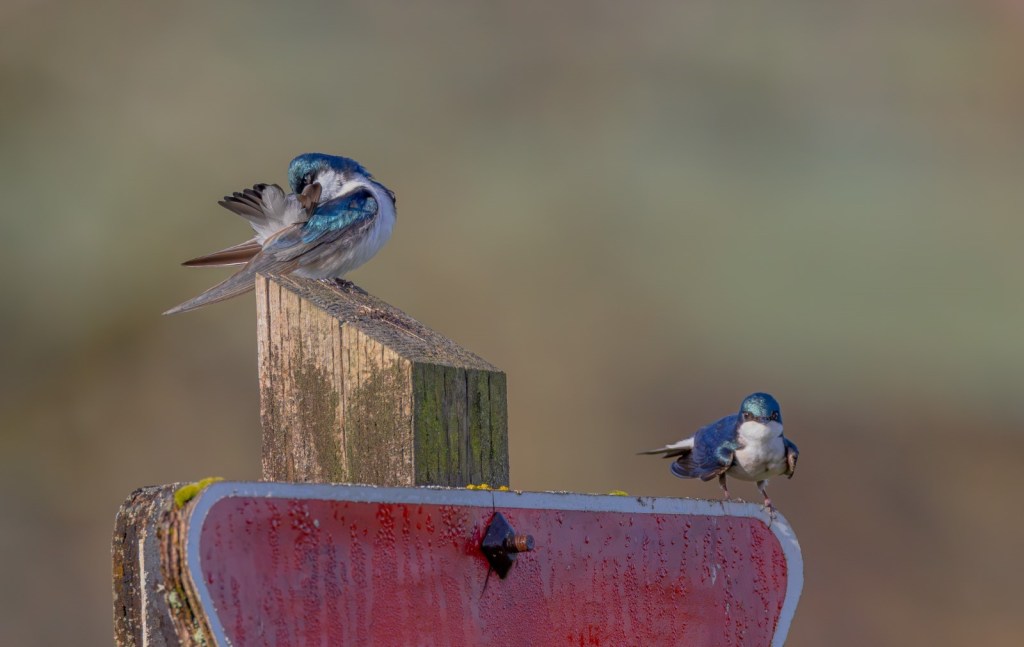
The Tree Swallows, cutting through the air with precision dives and turns of their own, did not conceal their intentions, hoping for a momentary dereliction of duty on behalf of the bluebirds, in order to execute a lightning-quick nesting box coup.

I did end up with a few good flight shots.
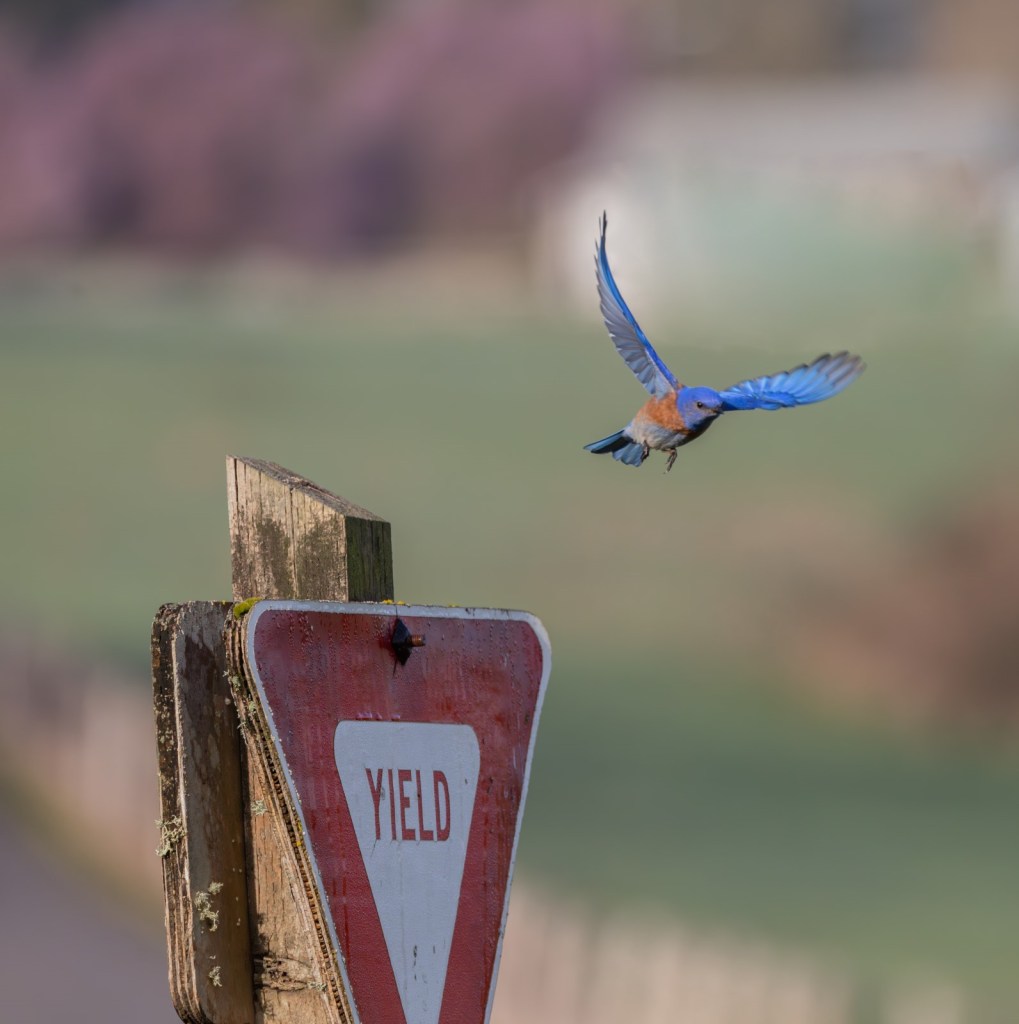
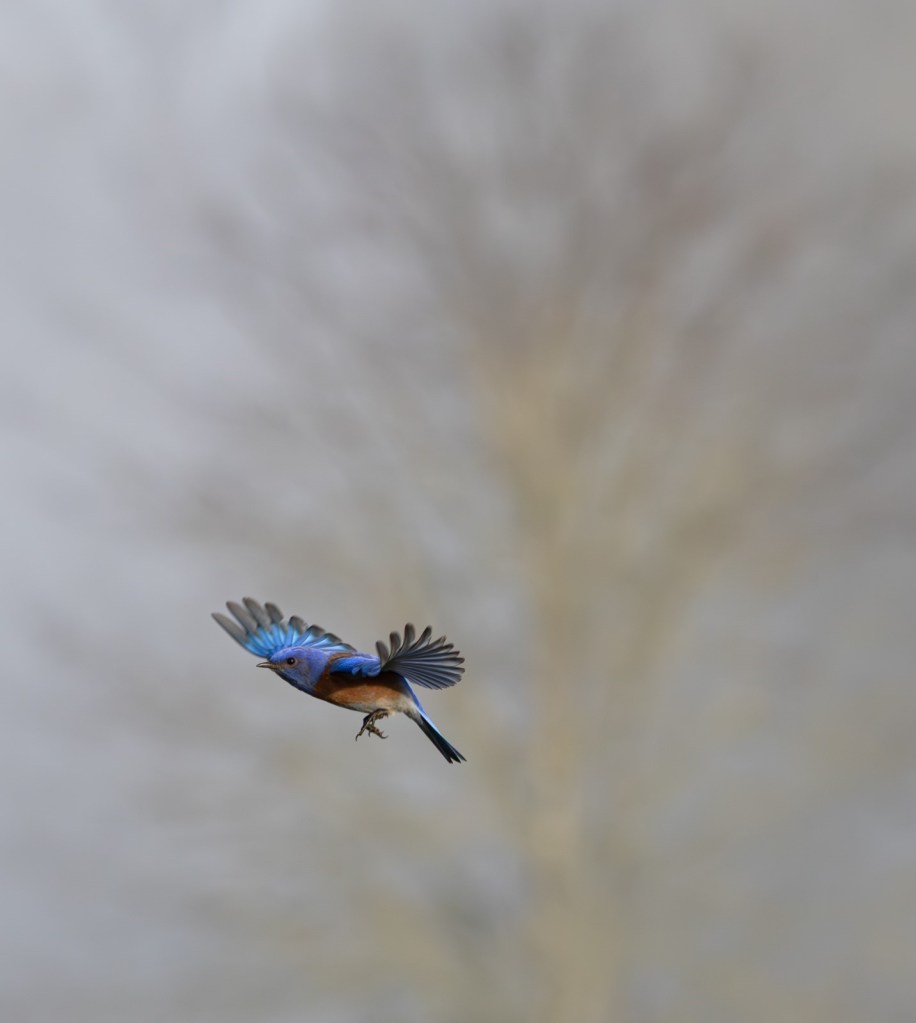
There are Eastern, Mountain and Western Bluebirds, members of the thrush family. Besides reading about their habitat, range, diet, migratory behavior, etc. on the Cornell Lab of Ornithology site, I learned something astonishing. The color blue does not exist as pigment in the feathers of birds. The feathers are not actually blue. In a Smithsonian Institution article published on April 28, 2016, author John Gibbons explains:
“When is a blue bird not blue? The answer to this question is always. There actually is no such thing as a blue bird.” To find out why, Smithsonian asked Scott Sillett, a wildlife biologist at the Smithsonian Migratory Bird Center.
“Red and yellow feathers get their color from actual pigments, called carotenoids, that are in the foods birds eat,” Sillett explains. “Blue is different―no bird species can make blue from pigments. The color blue that we see on a bird is created by the way light waves interact with the feathers and their arrangement of protein molecules, called keratin. In other words, blue is a structural color. Different keratin structures reflect light in subtly different ways to produce different shades of what our eyes perceive as the color blue. A blue feather under ultraviolet light might look uniformly gray to human eyes.”

I hope this male Western Bluebird (Sialia mexicana) and his mate, have success raising their family. They both seem very determined and capable. Good qualities for parents-to-be.
Champoeg State Heritage Area requires an Oregon State Parks parking permit or you can pay the day use fee with the machine on site.
 Vancouver Audubon